
In this episode, Mark Priddle, P.Geo., shares insights from his career in environmental geoscience, reflecting on both the challenges and highlights along the way. He offers practical advice for students and discusses how geoscience is perceived in society today, from environmental responsibility to professional practice.
Listen now:
You can also listen to our podcast on these platforms:
Read along with the podcast transcript:
Introduction
Hello, everyone. Welcome to Beneath Your Feet, a geoscience podcast. I’m Veronica Klassen, science communicator, geology enthusiast and your host. Here at the APGO Education Foundation, our mission is to spark curiosity and passion for the geology of Ontario. Whether you’re a geology nerd, science enthusiast, or nature lover, this podcast is for you. Join us as we geek out over fascinating geology, uncover the hidden stories
and secrets of our extraordinary planet and explore the captivating world beneath your feet.
Veronica Klassen
Hello, everyone, and welcome to another episode of Beneath Your Feet. Today, I’m going to be interviewing Mark Priddle, who is a senior environmental geoscientist with a consulting firm in Ottawa, as well as a part time farmer and full time grandpa, thanks so much for joining me today, Mark.
Mark Priddle
Oh, I’m looking forward to it. Thank you.
Veronica
All right. So let’s just jump right in. Why don’t you tell us a bit about yourself? Who are you and what do you do?
Mark
Yes, I’m an environmental geoscientist and I’ve been practicing in the field for over 40 years. Right now, I’m working about three days per week for a multinational engineering firm. But over the past 40 years, I’ve worked for two different federal government departments here in Ottawa and three different consulting firms. And those ranged in number of personnel from about 20 to now 22,000.
Veronica
Wow.
Mark
My focus in work these days is on hydrogeology. So water from the rocks, looking at water supply. Again, a good portion of the world’s population relies on groundwater as opposed to surface water. Also, dewatering. There’s a lot of construction projects, many, many construction projects require water to be pumped out of the ground to enable the construction and also water quality issues.
In addition, I work a lot in contaminated site assessment and cleanup with lots of historical contaminated sites, even some fairly modern day ones. And work on that to help improve the environments and redevelop properties and so forth. And I have a few interesting multi-disciplinary projects related to abandoned mine sites, as well as green energy, and that includes solar farms and battery energy storage.
So that’s sort of what I’m up to these days.
Veronica
Okay. That’s a lot of different things. So what exactly does a day in the life look like for you? What are you doing both when you’re in the office or when you’re out in the field or working on different projects? What does that look like?
Mark
Yeah. So I’m really blessed to work in a quite a wide variety of scenarios in my day to day job. I do spend about half my time in front of a computer and that involves analyzing data, writing reports, corresponding, keeping in touch with my colleagues, clients, regulators and so forth. But I still get out to do work in the field for environmental side assessments, testing soil and groundwater and other other things in the field.
Also, I spend a fair bit of time with clients, regulators, public meetings to discuss projects, answer questions, plan various projects. So I do have a great variety and I think that’s one of the things that I really like about my profession. And geoscience in general, you get sort of all three aspects: sitting in the office using your mind, in the field doing physical things, and also testing your mind as well as interacting with the public and colleagues and, and regulators.
Veronica
Yeah, yeah. That’s what I love about geoscience. I feel like you can really kind of choose your own adventure a little bit depending on what you’re most interested in. If you want to spend more time in the office, you can absolutely find a job that’s like entirely office work. If you want to spend more time in the field, like there’s lots of opportunities for that too. And so yeah, it’s kind of cool that way.
But I’m curious how you ended up where you are. How did you originally become interested in geology or geoscience?
Mark
So, so I took a little bit of a roundabout way. In high school I enjoyed and was successful in chemistry. So I headed off to university to study chemistry. But my first work term, just after four months of school, with the federal government in a groundwater contamination group at Environment Canada. And during that time I worked with some really good seasoned geoscientists and sort of things proceeded from there.
I worked for a few years as a chemist or a geochemist before getting a master’s degree in groundwater studies. And then it’s been pretty much strictly environmental geoscience since that time. So a little bit of a roundabout way. I always did like the Earth and things related to the Earth, so that’s how I ended up in geoscience.
Veronica
Cool, cool, cool. Yeah, I find that’s the case with a lot of people that I talk to as well, that yeah, it’s isn’t always exactly clear. Like when you were a kid, did you kind of think you wanted to be a chemist or a geochemist?
Mark
So I definitely like the sciences. I wasn’t sure what it was going to be and not strongly interested in rocks. I didn’t ever have a rock collection until I was kinda working in my consulting job.
Veronica
Hmm. Interesting. Yeah, that’s quite cool, because I feel like a lot of people assume that, like, if you don’t like a super rock person or whatever, that you can’t do geology. But that’s definitely not true.
And what would you say your best piece of advice would be for students who are trying to figure out what to study or pursue for a career? You know, maybe they’re in a place where you were, they don’t necessarily have one thing that they’re really excited about, but they like the outdoors maybe or they’re just trying to figure it out.
Mark
Yeah, that’s a great question. I do spend a lot of time with students, actually, and nine years on the Council of Professional Geoscientists, Ontario, I visited three universities quite regularly in eastern Ontario to talk to students and career paths and more related to becoming a professional. I also have three adult children who’ve all taken very different career paths from myself and my wife.
And in watching them and their peers, it seems that the most important career advice I can give is to find something that both you’re passionate about and which has employment opportunities. And by that, I mean too often I’ve seen people being unhappy, making money in a career that they hate. Or working as, for example, a barista, because there’s no jobs in their field of passion or study.
Right. And so I can, I can definitely say that I was fortunate that I found this in my geoscience career. So it’s something I’m passionate about. And which there’s a lot of employment opportunities. And again, not like the traditional mining exploration and so forth, but in the sort of exciting, slightly newer field of environmental geoscience.
Veronica
Mm hmm. And what would you say is most kind of exciting about the new field of environmental geoscience? Like what excites you about that?
Mark
Yeah. So a few things. You are definitely out in the field. You’re trying to look after things which everybody requires on a daily basis, like water, clean soil, and fixing mistakes of the past, shall we say. And making sure those are not repeated.
Veronica
Mm hmm. And that’s. Yeah, super important, especially right now with the climate, environment and things like that, to make sure that we’re taking care of the things that have happened in the past. Yeah. Cool. Awesome. Well, thanks so much for that advice.
I’m also curious how your journey with geoscience has changed over time. What are some of the kind of highest and lowest points of your career journey?
Mark
So as I mentioned, I started my schooling and employment career focusing on chemistry, working in the lab and analyzing samples. And I have to say that it kind of wore on me for a bit when I was strictly doing chemistry for a federal government department, and it was just a steady stream of samples, all the same extraction analysis and so forth.
And that was kind of a low point. It was kind of interesting. I was testing the blood of Indigenous people for polychlorinated biphenyls.
Veronica
Wow.
Mark
And so, I didn’t really deal with very much except for the samples. But it was interesting.
Veronica
And what did you find in that?
Mark
So the issue is that Indigenous folks who hunt and harvest typically eat more things like seals with fat and beluga whales and so forth, and are more likely to suffer from the bioaccumulation of bad chemicals like PCBs. And so you wouldn’t find PCBs in people who eat, definitely not vegetarians or people who eat farm raised meat, let’s say.
So we were occasionally finding higher concentrations in people’s blood who eat country foods as the term is sometimes used.
Veronica
Mm hmm. What happened kind of with the results of that study? Because you said this was for the government?
Mark
Yeah. So be honest with it. I just worked in a lab and did the analysis and then never found out what happened with it.
Veronica
Hmm. Interesting. Well, that’s a very interesting thing to study, though. That’s cool.
Mark
Yeah. So, again, just tell me about how things changed in my career. So I switched more from chemistry to geoscience. And so I started doing field work with some chemistry. I did take instruments out in the field to measure different parameters in water, groundwater, and that’s when I knew I wanted to follow the environmental geoscience path.
So in consulting, I started a lot with field work. And that’s just typically what happens as a younger professional as you’re out there doing field work, collecting the data for someone else to work with. That included a lot of time away from home and family. And it was enjoyable and was exciting in many ways.
But slowly you move toward more data analysis, reporting and project management and people management, so it’s a bit less, less field work. And this definitely helped my career. And I’ve been involved in a lot of non geoscience work and was more senior management. And I still had my hands in technical work. So I think as a geoscientist, you got to be aware that at some point you have to be dealing with budgets and finances and strategic planning.
But now just in the last few years, I’m back in a strictly technical role dealing with my own projects and budgets, undertaking technical work a bit more thinking and things like that, but less to do with overall budgeting and people management. And like I mentioned, I’m still very grateful that I can get out in the field regularly.
Veronica
So yeah, So you’ve done lots of different things. I know you’ve done a lot of reclamation projects. What would you say is the most interesting or challenging reclamation project that you’ve worked on?
Mark
Yes. So there’s a couple ones that kind of are quite different, but interesting. So more than 20 years ago, our company did a lot of work for a railway company and we were involved in environmental cleanup of historical spills, but also emergencies. So I was involved in a derailment where diesel fuel and lots of other things were spilled and I ended up being the coordinator for the cleanup and it turned out to be somewhat less technical and more people management and so forth.
The railway, once they got the tracks running again and the trains going, they basically said to me in my company, can you take care of everything else? And that included angry neighboring landowners.
Veronica
Yeah.
Mark
So the nearest person was very upset by what’s going on. They drove through her land and messed everything up to get to the derailment site. And so I had to deal with this person. And she worked long hours during the week so I could only go there on weekends and I knew she was upset so I took my two kids who were quite young at the time. And that sort of calmed the whole thing down. She loved them. We could talk about how to get the site cleaned up and I could speak on behalf of the railway. So it included not really environmental stuff, but it was like finding all the chunks of metal from a big explosion on her property. So that was kind of different. Not really geoscience.
I think the one that was most rewarding to me as well as interesting and challenging was the Deloro Mine cleanup. So it’s out in the public there. So there was an old gold mine which unfortunately arsenic is often associated with gold. So they started trying to get gold out of the ground and found out it was mostly arsenic so they actually turned it into arsenic production.
Veronica
Oh, wow.
Mark
Arsenic was an important chemical for pesticides and other uses. So the company went bankrupt and the site changed hands, but eventually it became property of the crown. And the Ministry of Environment in Ontario was the overseer. So our company, this was back in 2011, was awarded a contract to oversee the reclamation of this site. And there were a bunch of different phases and it was very interesting.
So I looked after a group of specialists who reviewed all the work and what the contractor was doing, and we had people on site for many years just keeping an eye on the truck movements and counting trucks and making sure the contaminated soil went where it was supposed to and the site was graded properly and all that. But we dealt with all sorts of different things, including spill events and runoff and low water periods and eventually the sites, a major portion of the site has been fully cleaned up. And our company actually won an award from the Consulting Engineers of Ontario for the project. So it was a it’s very interesting. There’s a little plaque in the village of Deloro talks about work and the Moira River runs right through the site and mining and the tailings ponds and everything were right next to the river. Quite a bit of work that involved taking stuff out of the river and making sure arsenic wasn’t getting into it.
So I think that was a big win, an exciting reclamation project.
Veronica
That sounds really cool, that seems very, like you said, rewarding to go to work on that and make a difference.
Mark
And I’ve been fortunate to be able to do a fair number of talks on it over the years.
Veronica
Okay, cool. Kind of to teach people what you learned is that the idea?
Mark
Yeah, yeah. Just the interesting geoscience aspects, right from the actual start of what we would call now artisanal mining to get the gold out to running into all this arsenic and then how the project evolved into a reclamation and site restoration.
Veronica
Okay, that’s super, super cool. All right. Well, I want to pivot just a little bit and talk about perception of geoscience in society, because one of the things that I really want to talk about on the podcast is just how geoscience is perceived by the public and how sometimes that can be helpful or unhelpful, accurate, inaccurate, things like that.
So what do you think is kind of the most surprising thing that you found about being in geoscience that you don’t think that a lot of people know about?
Mark
Yes. So whether we appreciate or understand it or not, every aspect of our life is affected by geoscience. I live in a town with a communal water supply and that water does come from the ground. So that’s a lot of hydrogeologist are involved in that kind of work. Building materials of any type do come from the ground in some way, whether it’s the cement powder and the aggregate used to make concrete or the steel beams or the the wood that’s been harvested by machines that do require steel and all that.
So it affects just about everything. I know people complain about mining and pits and quarries and so forth, but they rely on them, which to me is the most surprising thing. So if you have a gravel road that gravel has had to come out of the ground somewhere, this has to be engineered and placed so that you can drive. We have a converted railway through the town I live in and that’s all stone dust, which came from a quarry which makes it possible to walk and bicycle on. It’s just it is quite fundamental, whether we understand it or not. I think that’s the, the thing that I’ve really found.
Veronica
Yeah, definitely our society as a whole really depends on mining. If you’re going to be in this society you are depending on mines and mining.
So how do you think, like there’s this expression that goes “if it’s not farmed its mined.” So how do you think people can kind of start to interact with the world differently knowing this?
Mark
Yeah, Yeah. So again, I’ve been involved in geosciences for over 40 years and somewhat involved in agriculture just through some family connections. And now I belong to an agricultural society and I really appreciate how these two are combined to form the basis of pretty much every society. So obviously we all need food and farming is how it’s provided, no matter how simple or complex it is.
But farming can use everything from simple hand tools to the most complex tractors and technology to produce our food. Now, the really important thing is something like fertilizer. So Canada’s a very big producer of potash, which is really key to growing food and providing for us. And that again is mined, requires a lot of geoscience. So we do rely on these two things.
And in order to have any society, you require both of these things. Again, just think of a simple like iron hoe to till the earth before you plant. That requires iron extracted from the ground and then some machining to make it or a very complex tractor. And now they have GPS and all sorts of high tech stuff, so you need all the different rare elements to make that. So these are very intertwined.
And another important thing is technology is used in everything and even more now in both mining and in agriculture. I was recently at a farm that was robo farming. And so the cows are just out in the pasture and then when they get hungry, they come in, their food is spat out, and then if they’re dairy cattle, they have a barcode and a scanner and they know which cow it is and how much food it needs and what kind of milk it’s producing. Once in it gets milked automatically. The milk is weighed, protein content is checked, and that’s all put into a computer. It’s all carefully controlled. But that requires, again, a lot of technology.
And technology always requires things like rare earth elements which must be mined and there isn’t enough of it to be recycled and so forth, for the way things are proceeding.
Veronica
Hmm. Yeah. Because I know even like cell phones is kind of the one that people often mention, which require a lot of rare earth minerals.
Mark
Yeah, EVs and cell phones for sure are big ones.
Veronica
Yeah. And like you said, can those things be recycled? Like, I know there’s so many, like, old cell phones that just end up in the trash. Like, is there a way to recycle that those materials?
Mark
So I, I think it’s difficult. And the thing that I’ve seen it, it’s really small quantities and a vast number of devices which are very hard to take out. And right now people are working on that. But I don’t think we’re that close. Plus just the pace at which more technologies is needed, recycling wouldn’t fulfill the demand.
And there’s also like solar panels, wind turbines and so forth, even a hydroelectric dam, all these things which are considered green energy do require mining.
Like you can think of a hydro dam. It’s a huge amount of reinforced concrete, all of which came from the ground, including their reinforcing bars and all that. Yeah, and then the turbines and so forth. So that’s all needed.
Veronica
So yeah, even if we’re trying to, you know, create green energy, we still need the mines, we still need the mining that’s interesting.
Mark
Yeah. We haven’t really talked about fossil fuels but essentially they’re all mined as well. And aside from being used as fuels everything plastic is fossil fuel. The use of lubricants which you need in gasoline cars and electric cars. We drive on asphalt which is about 3% heavy oil. Which we can forget about.
Veronica
And even like technology is designed with like what’s it called? Planned obsolescence, like where it only lasts a few years and so that you always need to be buying more if you want to continue using that technology because it will stop working. There’s a lot of issues that we can see, obviously, but kind of in a bit of like an ideal world scenario, how would you want people to apply this knowledge to their lives? Like the knowledge that if it’s not farmed, it’s mined. Like how would you like people to kind of think about things differently, maybe, or do things differently? Is there a way that you could see that change coming?
Mark
Yeah, so I like to think, I have kids and grandkids like to talk to them, but when you sit down at a meal, think about everything you’re looking at, whether it’s the food or the plates or the chairs or the stove or whatever, that at some point it’s required geoscience. So whether it’s the clay that’s in your china plate or the stove, if it’s gas, natural gas comes from the ground it needs geoscientists to get it out of the ground. Or an electric stove, even if it’s green energy, if you got solar panels, that makes the power, those require lots of elements from the ground, from basic steel for the framing to different elements in the panels themselves. So just keep an open mind and understand that lots of different things are required for modern society and they basically all require at some point some form of resource extraction.
Veronica
Yeah. Okay. Yeah. So just being aware of these things, is there like a step beyond that that you would like to see people take? Like, is there I know this is kind of like again, ideal world scenario but like something you would rather people do about it?
Mark
Yeah, I think it’s just having an open mind and thinking. And when you see people say this is the greatest thing in the world or this is the worst thing in the world, take a look back and say, you know, what does it require for extraction to make it? The challenges? Do we know where the material comes from? Talk a bit more maybe about things like mining in developing countries, which is really not good for people or the environment. Keep that stuff in mind.
Veronica
Yeah. So it’s more complicated than just, you know, good and bad. You have to think about the effects of mining and kind of in all ways. And I mean, you feel like your job really is about how do we mine sustainably. I know you are working more on, like, the reclamation side, but then, of course, the flipside of that is, you know, how are we changing things so that in the future we’re not creating as many reclamation projects.
And I’m curious actually if you have done a lot of work on the flipside, like is there anything that you’ve kind of learned through your work that could apply to future mining sites?
Mark
Oh yeah, yeah. I think a big thing is typically in most mining in Canada, the dispersal of contaminants is via water. I think we’ve dealt a bit more with the air emissions like in Sudbury with scrubbers and so forth. But how do you keep, let’s say, rainwater away from the waste that’s going to cause a problem? That’s a really big thing. The issue of tailings ponds, waste rock and all that kind of thing. When you look at old mine sites, could it have been done differently? We’re now looking at, you know, you find tailings and waste drop that actually have concentrations which are now economically viable to extract. So it was a waste 100 years ago inside a mine causing an environmental problem. Now it might be the resource. And can we think of that when we’re in the process of mineral exploration?
Veronica
So making the most of the resources that are there so that we’re not creating waste.
And more like generally, is there anything specific that you would change about the perception of geoscience in society? So kind of back to that idea of like how people think about geoscience more generally than like mining itself?
Mark
So again, my field of geoscience, environmental geoscience is quite different from most people’s perception of geology. And so I personally have never done mineral exploration or work in an active mine. I’ve been on a lot of old mine sites. And I think we need to understand humans have damaged the planet in many ways, whether it’s mining or other things. But there are many ways we can improve and this really applies to resource extraction or mining.
And while resource extraction really is crucial to every aspect of modern life, I would hope that we’re doing a better job. And so as geoscientists, we can be considered both a provider of resources and a caretaker of resources.
And that doesn’t mean you can’t change anything. But if you do change it, the impacts are mitigated or reasonable or different let’s say.
Veronica
Yeah, I think it would help a lot if people kept an open mind about those things. All right. And then to end, I always just ask people, what is your favorite geologic feature in Canada? I know you’ve done a lot of travel for your work and outside of work. So from all of your travels, what’s your favorite geologic feature?
Mark
Yeah, so I appreciate that question. I think back the Magdalen Islands are located in the middle of the Gulf of St Lawrence and we visited them a few years ago and that was for pleasure, not for work. And despite their small size, they’re extremely diverse and complex and where they are in August is beautiful, many hundreds of kilometers and beautiful sandy beaches with dunes, lovely rolling hills, tidal flats, some good spots for kite surfing and so forth. In some areas, the islands just look like you’re in Prince Edward Island, beautiful red sandstone cliffs and beaches.
Their geological history is interesting. It includes the formation of salt diapirs and also the impact of glacial processes. There was a big sheet of ice over that, those islands as well. The islands are part of the what’s called the Maritime Plain and Basin, and they’re influenced by tectonics where the plates are being extended and the evolution of the islands has given some of those really diverse landforms.
And so it includes volcanic hills, it’s kind of interesting sandstone platforms and really neat coastal cliffs. And I have some good pictures of just our travels there. So they have unique volcanic rocks and their inner stratified with sedimentary rocks, gypsum, limestone and silt stone.
Again, this large deposits of gypsum, like I mentioned about salt, there’s some salt domes and there’s a large salt mine on the island. And we had a little tour of it. And it appears very unobtrusive. There’s a big dock because the mine’s been in production for decades and it supplies millions of tons of road salt for many locations in eastern Canada. So just like steadily, a ship gets filled up, chugs back and forth to Quebec City, Montreal and all that with the road salt. So it’s an interesting resource extraction. It seems quite innocuous, but combined with that, that really interesting geology.
Veronica
Mm hmm. That’s super cool. What did you say the island was called again?
Mark
The Magdalen Islands. So it’s part of Quebec right in the middle of the Gulf of St Lawrence. And most people get there with a ferry from Prince Edward Island.
Veronica
Really? Okay.
Mark
You also can chug all the way from Montreal if you want, but it’s about 5 hours from Prince Edward Island. Super interesting.
Veronica
Wow, that sounds so cool. I’d never heard of these islands before, but that sounds really awesome. Like a great place to visit.
Well, thank you so much for all of your advice and all your fun stories from your life. It’s been really fun to talk to you.
Mark
Yeah, well, likewise, thanks very much Veronica.
Veronica
Yeah, of course.
Mark
I hope this is of interest to anybody contemplating geoscience.
Outro
Thank you for tuning in to this episode of Beneath Your Feet, a geoscience podcast. I’m Veronica Klassen, science communicator and geology enthusiast. As a reminder, please note that the opinions and views expressed by our guests are their own and do not necessarily reflect the official policy or position of the APGO Education Foundation. If you want to learn more, visit us at GeoscienceINFO.com, where you can find our GeoHikes, podcast transcripts, and additional resources. You can also follow us on Instagram, Facebook and TikTok at GeoscienceINFO or on LinkedIn and Facebook at the APGO Education Foundation. Stay curious and keep exploring the incredible world Beneath Your Feet.
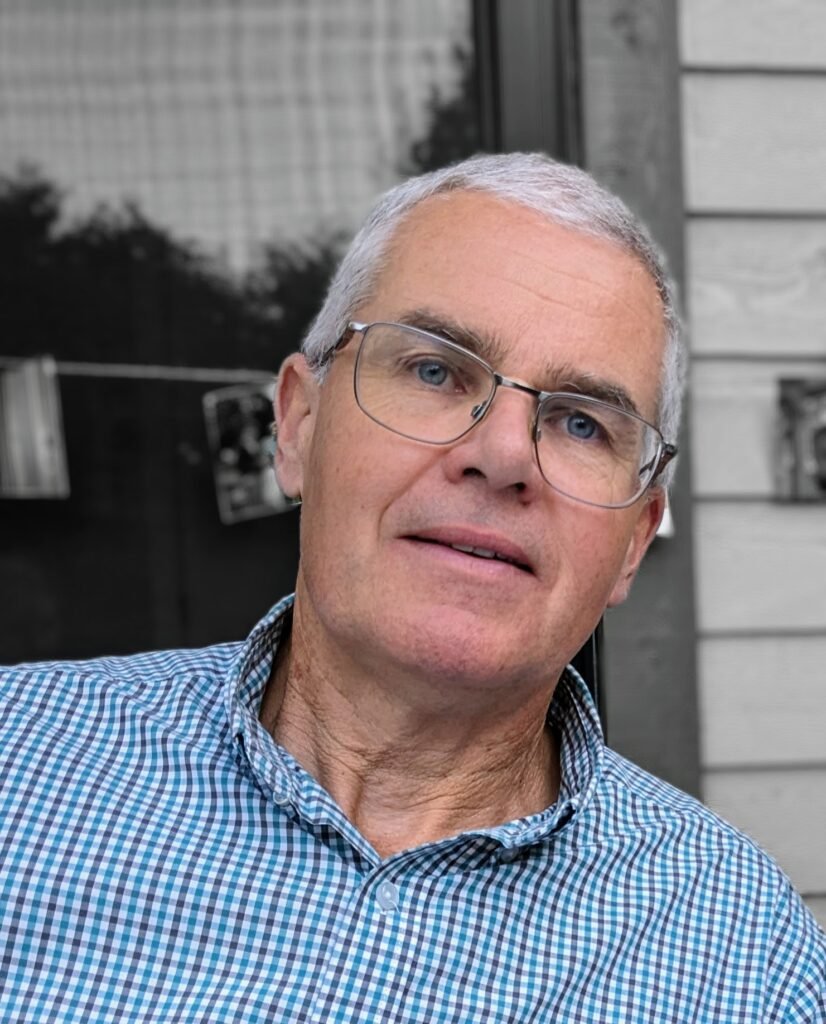
Mark Priddle, P.Geo., is a Senior Environmental Geoscientist working for a global engineering firm. He practices principally in the field of environmental geosciences (contaminated sites and hydrogeology). He has been a firm supporter of PGO since its inception, having received his P.Geo. in 2002. He spent nine years on PGO Council, including a term as President. He has also been PGO’s representative on the Board of Geoscientists Canada (umbrella group for geoscience regulators in Canada) including a term as President of GC. Mark is still active with PGO and APEGA on various committees.